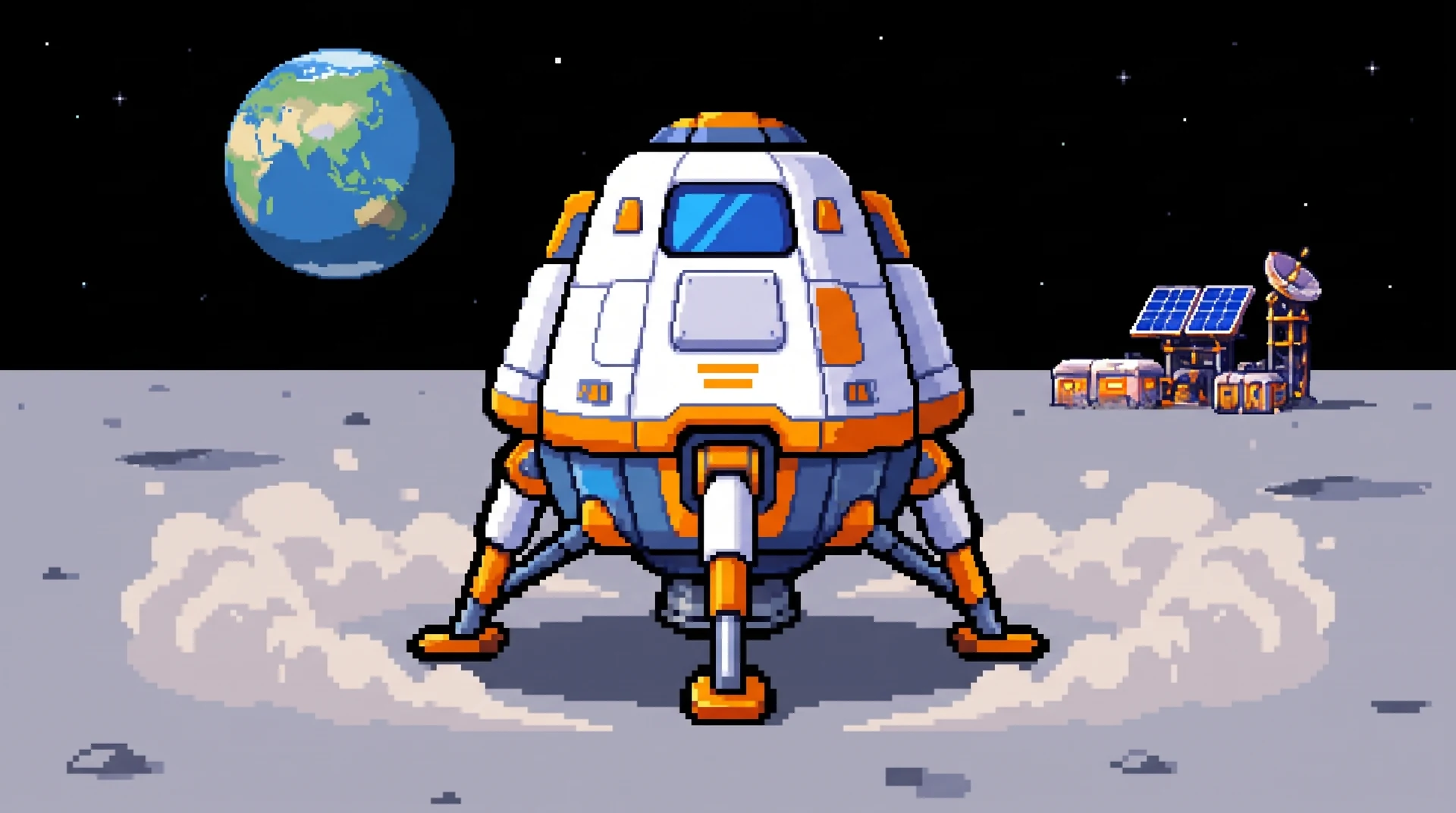
Contact Earth, inspect the four base systems, explore the plains, collect rock samples and build your first machine.
Resources are limited, local materials matter, tools wear out, and no mineral is a pure metal.
Astro Kid puts a child in the boots of a young astronaut at a half-built outpost on the Moon. Every choice costs something, and every mission leaves you understanding one real constraint of deep space survival.
The missions are linked: your base, supplies, research and discovered map carry over from one to the next. Follow the trail to see what you do and what you learn.
Walk the surface and find new regions.
Mine rock samples with your pickaxe.
Carry the samples back and store them.
Unlock new technology at the workstation.
Craft machines and install them in the base.
Keep oxygen, stamina and hunger healthy.
Contact Earth, inspect the four base systems, explore the plains, collect rock samples and build your first machine.
Resources are limited, local materials matter, tools wear out, and no mineral is a pure metal.
Balance solar panels, batteries and which machines to run.
Power budgeting and storage, and why night is a problem on the Moon.
A solar storm is coming. Build and place shielding and decide what to power.
Space weather, shielding, and the cost of safety.
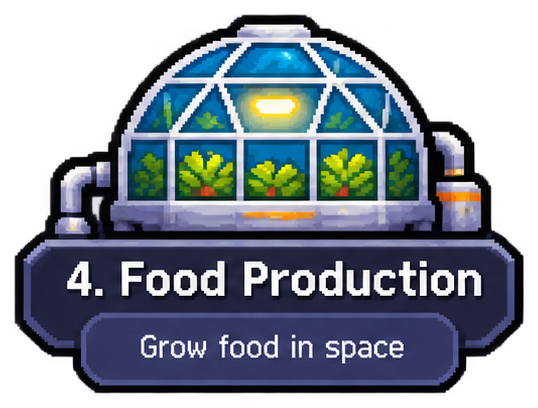
Build a growing area, analyze the soil and plant seeds.
Closed-loop food, what plants need, and why growing food in space is hard.
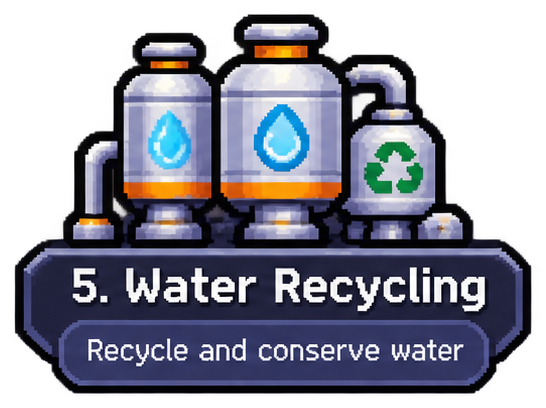
Find ice in a protected region, extract it and recycle your water.
Water is the most valuable resource, and how crews reuse it.
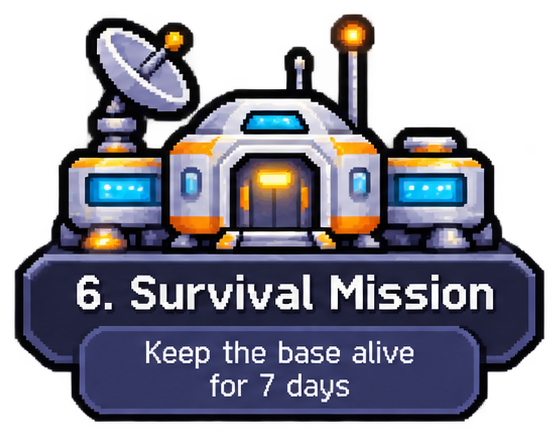
Run every system together for a full week of events, nights and choices.
Balancing everything at once: the real job of a mission planner.
Weaker sunlight, dust storms and a long communication delay. Urgent events must be handled alone.
Three characters guide every mission: the kid in the suit, the robot beside you and the calm voice from Earth.
That is you. A kid in a white and orange suit with a blue visor, in charge of a two-person mission. You explore, collect, research, build and keep the crew alive.
A small floating robot who helps you on site. Guide, tutor and the voice that explains how each system works, in short, simple sentences. Friendly and curious.
Your link to Mission Control on Earth, heard over the radio only. Calm, kind and practical. On the Moon his answers arrive almost at once; on Mars they take a long time, so you will have to decide alone.
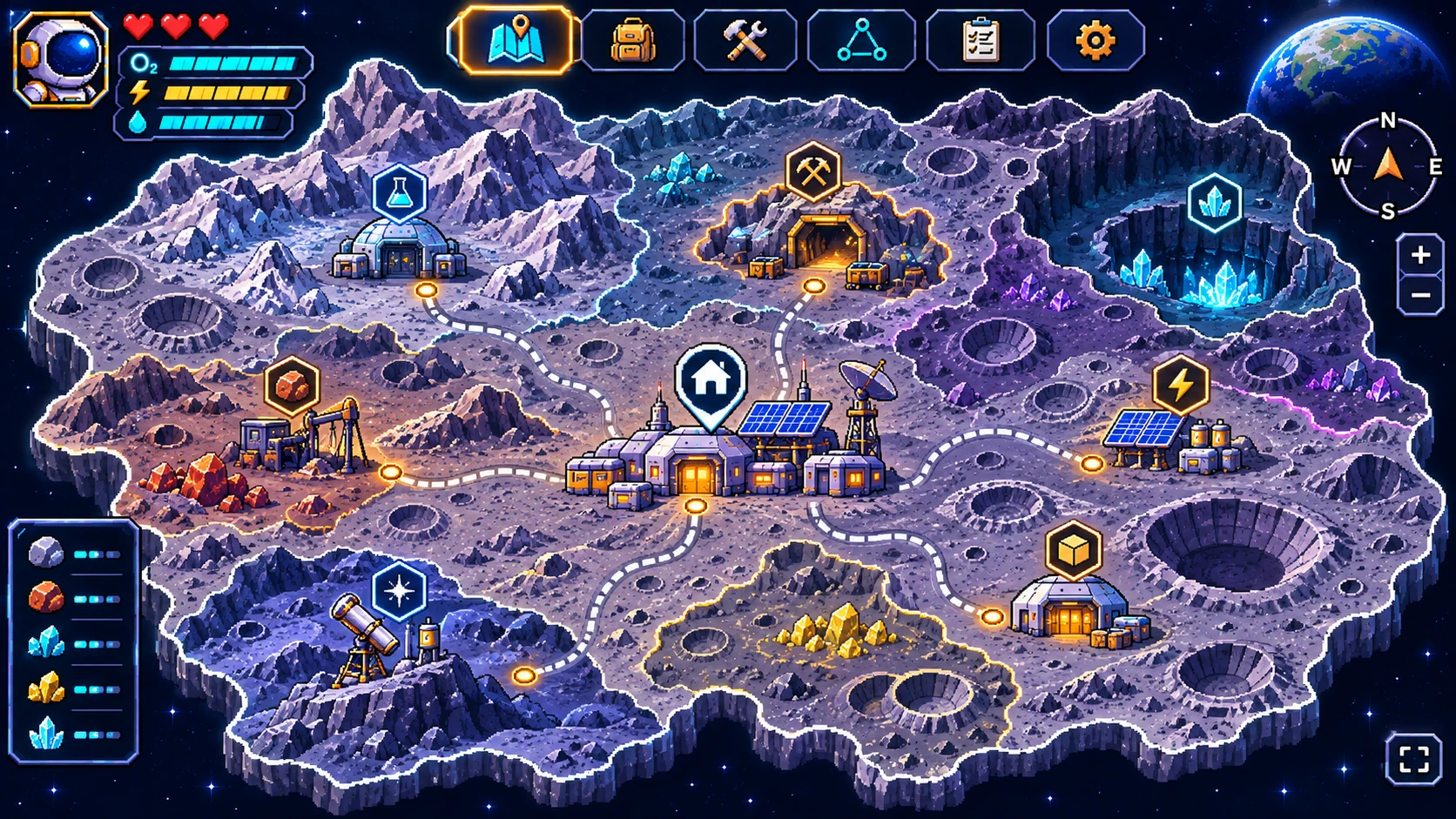
One big lunar map, seven regions and two caves. The map stays the same in every mission. Only what you have discovered changes.
Your outpost: airlock, workstation, storage, life support and bed. Open from the start.
Wide open ground with loose regolith to mine. Both caves are here. Open from the start.
Hidden by fog on the map. Walk in to discover it.
Behind a padlock. It opens in a later mission.
Behind a padlock. It opens in a later mission. Ice hides in shadowed places.
Water ice stays locked until you have the right protection and equipment.
A dark cave in the plains. Iron-bearing rock is found only here. Turn on your flashlight.
A dark cave in the plains. Silicate rock is found only here, and its crystals glow in the dark.
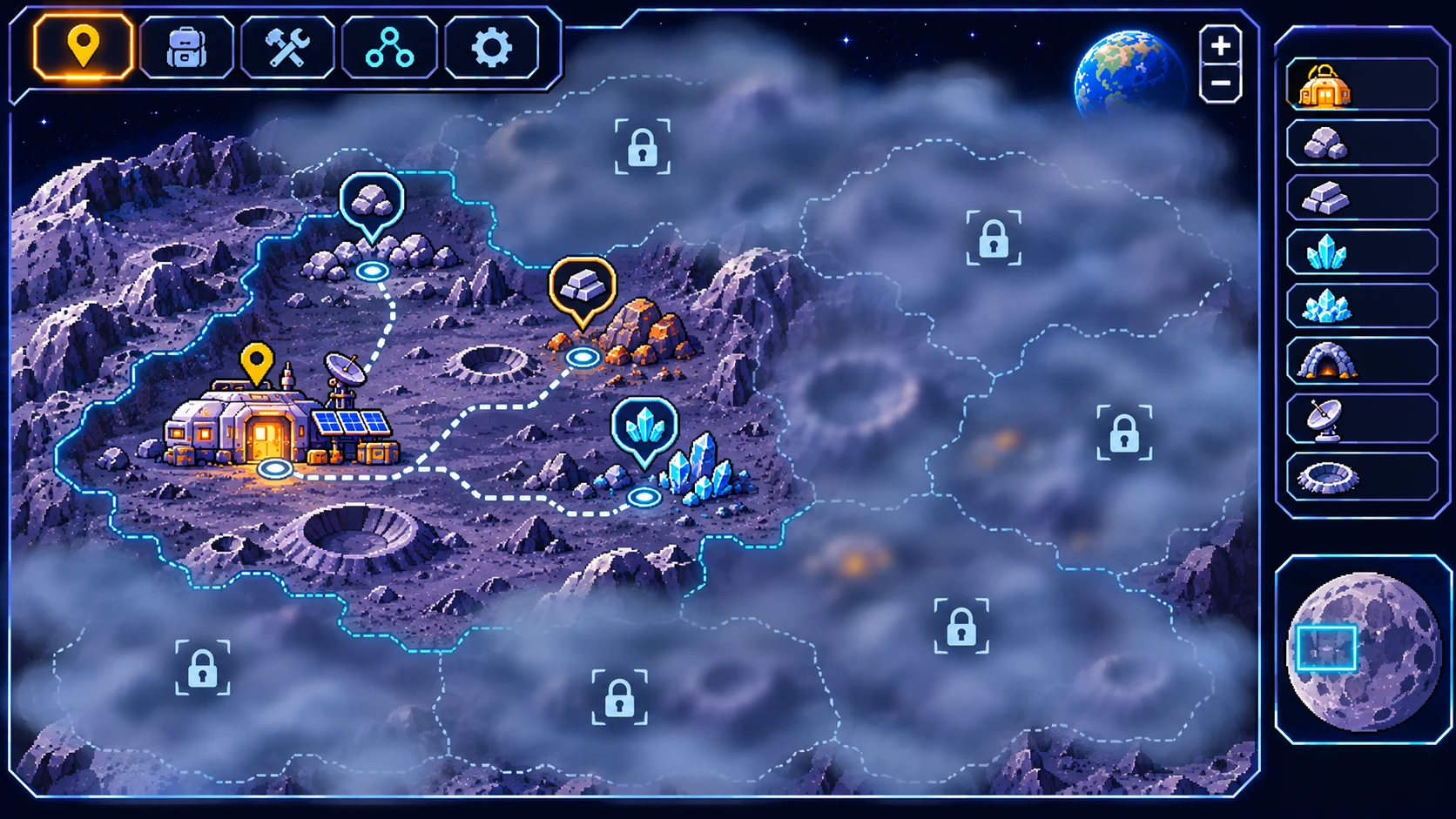
Every region is in one of three states. Exploring is what changes them.
Lunar Base and Lunar Plains are open from the start. Explore them freely.
Fogged regions show a "?" on the map. Walk in to discover one: its name appears, a "New area discovered!" message pops up and you earn a discovery bonus.
Locked regions show a padlock. They open as missions advance, and some need the right protection and equipment first, like water ice.
A round minimap sits in the top-right corner and follows you. When the outpost is far away, a little house arrow points the way back.
Press M outside the outpost to open the full map. Discovered areas show full detail, the rest stay foggy, and a yellow pin shows where you are.
Every mission starts at the lunar base. Four systems inside it look after the crew, and one of them is the doorway to the Technology Tree.
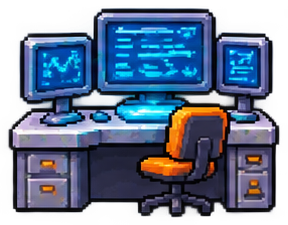
Your research desk. Open it to see the Technology Tree and unlock new tools and machines.
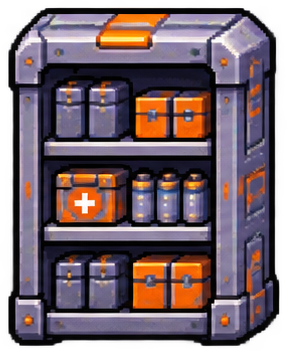
The crew's locker. It holds 3 oxygen canisters, 5 canned food, 4 spare batteries and 1 spare parts kit.
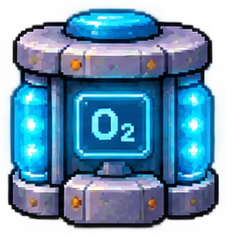
A temporary life support reserve of about 72 hours. That number is a game setting, not real engineering.
Sleep to restore stamina. Time keeps moving while you rest. It becomes available later in the mission.
Six branches of research. Finish a node to unlock a new tool or machine. Later nodes stay locked until more missions are done.
A locked node reads: "This research is locked. Finish more missions to open it." The tree above is how it looks in Level 1.
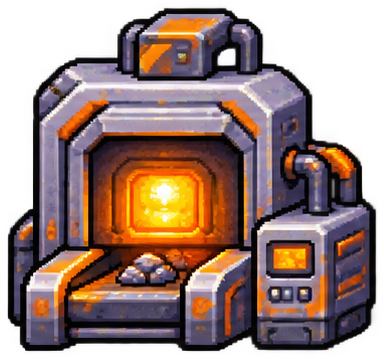
A simple machine that crushes and sorts lunar samples. You research it first under Tools, then craft it from rocks you collect on the surface and in the caves.
RECIPE
When it is ready, install it in the outpost with E. The processor has two looks in the game: off and running.
Drills, scanners, solar panels, shields and a lot more. Every mission unlocks something new to pick up, so a better tool is always waiting.

Drills, scanners, solar panels, shields and a lot more. Every mission unlocks something new to pick up.

Mine lunar rocks, repair a failing outpost and learn how astronauts really survive. Your suit is ready, NOVA is online and Mission Control is on the radio. Everything is ready except you.